If you’ve landed here searching for goat’s rue benefits, you’ve probably heard one of two stories: that it boosts breast milk, or that it’s “natural metformin.” Both stories have a kernel of truth, and both get oversold constantly. Here’s what’s actually known, what isn’t, and where the risks are.
Quick Summary
Goat’s rue (Galega officinalis) is a European legume with one genuinely remarkable claim to fame: a compound in it, galegine, inspired the development of metformin, one of the most widely used diabetes drugs in the world. The plant itself is a different story. It is widely used to support milk supply, but no well-designed clinical trial has shown that goat’s rue on its own works, and its blood sugar effects are backed by animal studies rather than human trials. It can also lower blood sugar and has a documented history of poisoning livestock, so it’s not a casual supplement.
Evidence Rating: Milk supply support Traditional use plus very limited human data. Widely used, not well proven.
Evidence Rating: Blood sugar support Animal studies only. No credible human trials found. Do not use in place of prescribed treatment.
What Is Goat’s Rue?
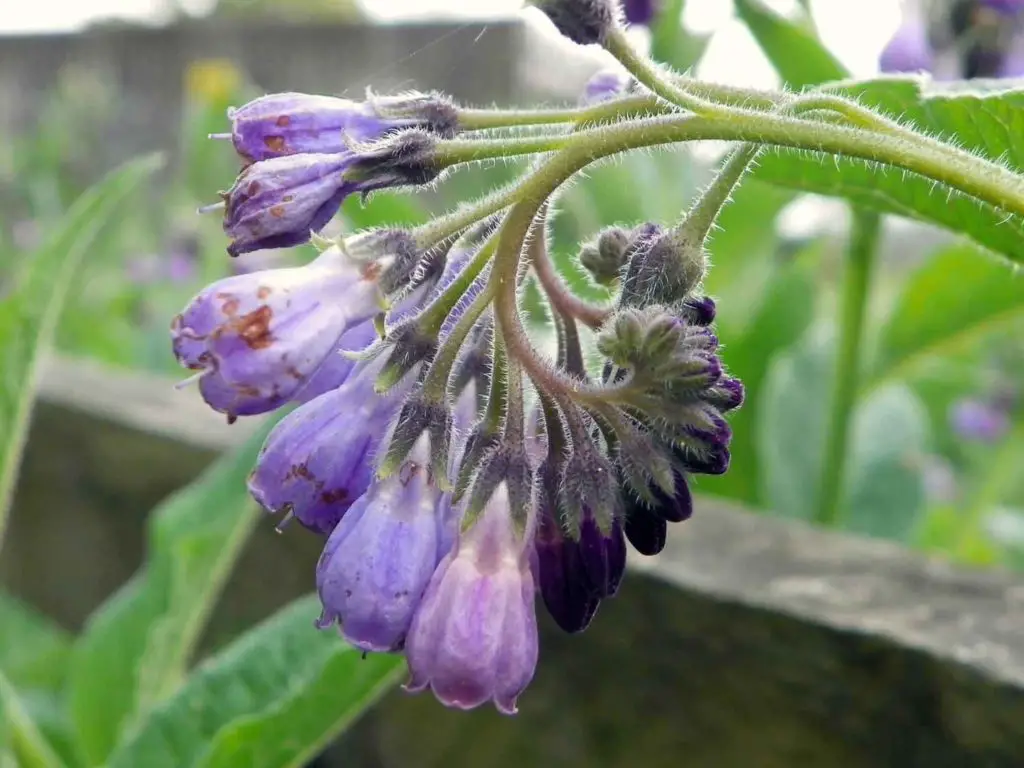
Goat’s rue is a leafy perennial in the legume family, native to Europe and parts of western Asia, and it goes by a few other names: Galega officinalis, French lilac, French honeysuckle. If you’ve seen a tall plant with clusters of pale purple or white pea-like flowers growing along a damp field edge, you may have walked past it without knowing.
For centuries, European herbalists used it as a galactagogue, which is the fancy word for something that’s meant to increase milk production, in nursing mothers and in livestock. The plant’s active compounds include galegine, a guanidine derivative, and that chemistry is exactly what made it interesting to scientists later on [1].
Goat’s Rue Benefits and Uses
Supports Milk Supply (Traditional Use, Limited Human Data)
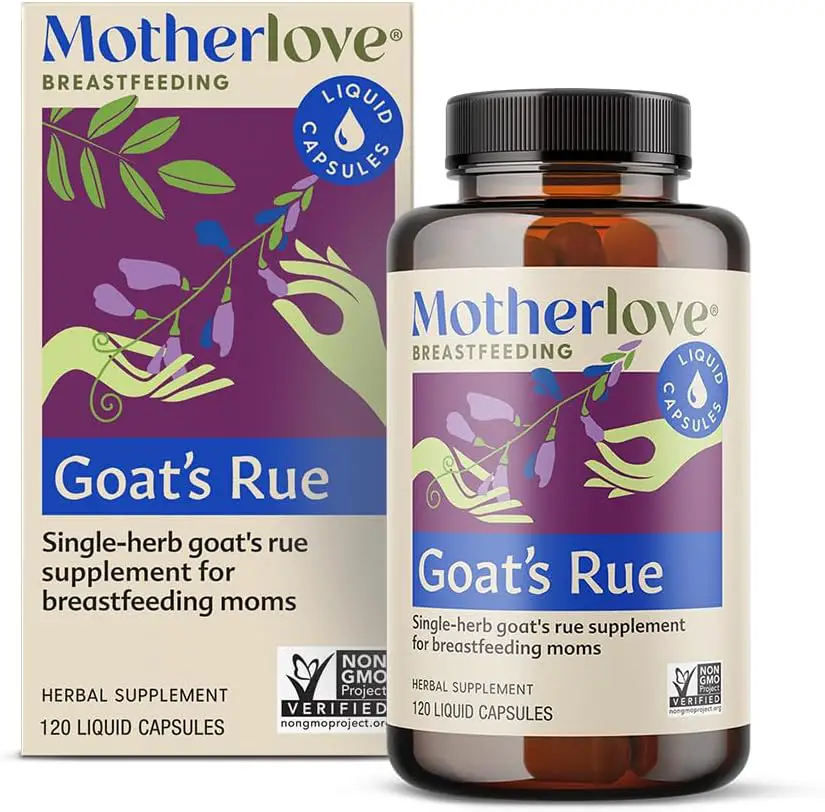
This is the main reason people buy it. Goat’s rue is widely used around the world as a galactagogue, but the NIH’s LactMed lactation database is blunt about it: no scientifically valid clinical trials support the use [1]. A 2016 review of herbal and pharmaceutical galactagogues went looking for peer-reviewed studies on goat’s rue and found none that met its inclusion criteria [2].
There are a few things that point the other way. Livestock studies in sheep and cows have reported increased milk yield [6], and one randomized study in mothers of preterm infants found more milk with a commercial product that combined goat’s rue with silymarin and phosphatidylserine [1]. Because three ingredients were involved, there’s no way to say what the goat’s rue contributed. A 2017 Italian review of a goat’s rue-based supplement relied largely on mothers’ reports, with about two-thirds saying their supply improved. That’s encouraging, but it’s survey data without a placebo group, so it can’t separate the herb from the effect of simply expecting it to work [3].
My honest read: it’s a reasonable thing to ask a lactation consultant about, and a poor substitute for sorting out latch, pumping frequency and feeding schedules first. The NIH database says the same thing, that galactagogues shouldn’t replace evaluation of the factors that affect milk production [1].
May Help Lower Blood Sugar (Animal Studies Only)
Here’s where the “natural metformin” line comes from. In diabetic rats and mice, extracts of goat’s rue and its alkaloid-rich fractions have lowered blood glucose, at doses ranging widely from 50 to 1,200 mg per kg of body weight, in studies that mostly lasted three to four weeks [6]. That’s a signal worth noting.
It’s not human evidence, though. I searched for human trials of goat’s rue extract and blood glucose and did not find a credible randomized trial. So the accurate statement is that animal studies are promising, and the effect in people is unproven. If you take diabetes medication, adding goat’s rue on top could push your blood sugar lower than you intend [1], which is the more immediate concern.
May Reduce Weight Gain (Mouse Studies Only)
A 1999 study found that goat’s rue reduced weight gain in mice [4], and later work in mice traced how galegine produces its metabolic effects [5]. A review of the animal literature summarizes the findings as reduced weight gain, blood glucose and food intake in mice given galegine [6]. This is early-stage, preclinical work. Nobody has shown that goat’s rue helps people lose weight, and since the same compound is behind the plant’s toxicity, I wouldn’t try to chase this one.
Where the “Natural Metformin” Story Really Comes From
This part is genuinely cool. Galegine is a guanidine compound, and chemists working from that structure eventually developed the biguanide drugs, including metformin [8]. Metformin is described as the only approved antidiabetic drug developed from an herbal source, with more than 50 years of clinical use [6]. If you’re curious how metformin and similar compounds work on the body’s energy-sensing pathways, our list of AMPK activators goes into it.
Here’s the catch. Metformin is a purified, standardized drug that went through decades of clinical trials. The plant is an unstandardized mix of compounds, and the same galegine that gave chemists their lead also makes the plant toxic. Saying goat’s rue is “natural metformin” is a bit like saying a grape is a glass of wine.
Goat’s Rue Side Effects
Goat’s rue has a real safety record problem, and it starts with livestock. Sheep poisoned by the plant have been documented in the veterinary literature [7], and a review of the research summarizes the toxic effects in animals as including tracheal foaming, fluid in the lungs and chest, low blood pressure, paralysis and death, with galegine as the main suspect [6]. Rodent studies also point to liver and kidney effects [6]. Those are animal findings at high exposures, not a prediction of what a capsule will do to you, but they’re the reason this herb deserves more caution than most.
In people, the main practical concern is low blood sugar, especially if you take diabetes medication [1]. Reports linked to goat’s rue combined with other herbs include diarrhea, an enlarged liver and raised liver enzymes. In one case, two infants had poor feeding and lethargy after their mothers drank an herbal tea containing goat’s rue, though the authors attributed the symptoms to other ingredients [1].
For breastfeeding mothers specifically, there’s very limited safety data on goat’s rue for either the mother or the infant [1]. Talk to your doctor or lactation consultant before using it, and be extra careful with blends that list several herbs.
Recommended Dosage
There is no clinically established dose of goat’s rue. No human trial has defined one, and the animal doses above can’t be converted into a safe human amount. Commercial products vary widely in what they contain and how much.
If you decide to try it, the sensible approach is to speak with a healthcare professional first, choose a product from a reputable manufacturer with a clear ingredient list, stay within the label directions, and monitor your blood sugar if you have diabetes or take glucose-lowering drugs. Stop and get medical advice if you notice shakiness, sweating, dizziness, unusual tiredness, or digestive upset.
Conclusion
Goat’s rue earns its place in medical history for inspiring metformin, and that’s the most solid thing anyone can say about it. As an herb on its own, the evidence for milk supply is thin and mostly traditional, the blood sugar and weight data come from animals, and the safety questions are real. If you’re a nursing mother wanting more milk, start with a lactation consultant. If you’re managing blood sugar, stick to your treatment plan and bring up any herb with your doctor first. For a wider look at what’s available, our guide to herbs for breastfeeding covers other options.
FAQs
It’s widely used for this, but no scientifically valid clinical trial supports it [1]. One randomized study found more milk with a product that combined goat’s rue with other ingredients, so it’s unclear what the herb itself did [1]. A lactation consultant can help you look at causes you can actually change.
No. Metformin is a synthetic drug developed from the chemistry of galegine, a compound found in goat’s rue [8]. The plant is an unstandardized mix that hasn’t been shown in human trials to work like the drug, and it carries toxicity concerns the drug doesn’t [6].
It’s generally well tolerated in the limited human reports, but it can lower blood sugar, and reports with herbal combinations include diarrhea, an enlarged liver and raised liver enzymes [1]. The plant is also known to poison livestock [7]. Check with a healthcare professional before using it, particularly if you’re pregnant, breastfeeding, or have diabetes.
Only mouse studies have shown reduced weight gain [4][5]. There’s no human evidence, and I wouldn’t rely on it for this.
Be careful. Goat’s rue may lower blood sugar, so combining it with glucose-lowering drugs could cause low blood sugar [1]. Talk to your doctor before adding it, and never swap it in for prescribed treatment.
Weak for people. The best-documented claim is historical, its role in the development of metformin [8]. The milk supply claim rests on tradition and limited data, and the blood sugar and weight claims rest on animal studies [1][2][6].
References
- Goat’s Rue. Drugs and Lactation Database (LactMed). National Library of Medicine. https://www.ncbi.nlm.nih.gov/sites/books/NBK501817/ (also indexed at https://pubmed.ncbi.nlm.nih.gov/30000876/)
- A Review of Herbal and Pharmaceutical Galactagogues for Breast-Feeding. Ochsner Journal 2016;16(4):511. https://www.ochsnerjournal.org/content/16/4/511.full
- The role of natural galactagogues during breast feeding: focus on a Galega officinalis based food supplement. Minerva Pediatrica 2017;69(6):531-7. https://www.minervamedica.it/en/journals/minerva-pediatrics/article.php?cod=R15Y2017N06A0531
- Palit P, et al. Novel weight-reducing activity of Galega officinalis in mice. J Pharm Pharmacol 1999. PubMed: https://pubmed.ncbi.nlm.nih.gov/10632090/
- Mooney MH, et al. Mechanisms underlying the metabolic actions of galegine that contribute to weight loss in mice. Br J Pharmacol 2008. PubMed: https://pubmed.ncbi.nlm.nih.gov/18297106/
- Administration of Galega officinalis in experimental and clinical investigations: a narrative review. https://www.academia.edu/33018132/Administration_of_Galega_officinalis_in_experimental_and_clinical_investigations_a_narrative_review (secondary source)
- Toxicosis from and possible adaptation to Galega officinalis in sheep and the relationship to Verbesina encelioides toxicosis. PubMed: https://pubmed.ncbi.nlm.nih.gov/3750812/
- Bailey CJ. Metformin: historical overview. Diabetologia 2017. https://link.springer.com/article/10.1007/s00125-017-4318-z