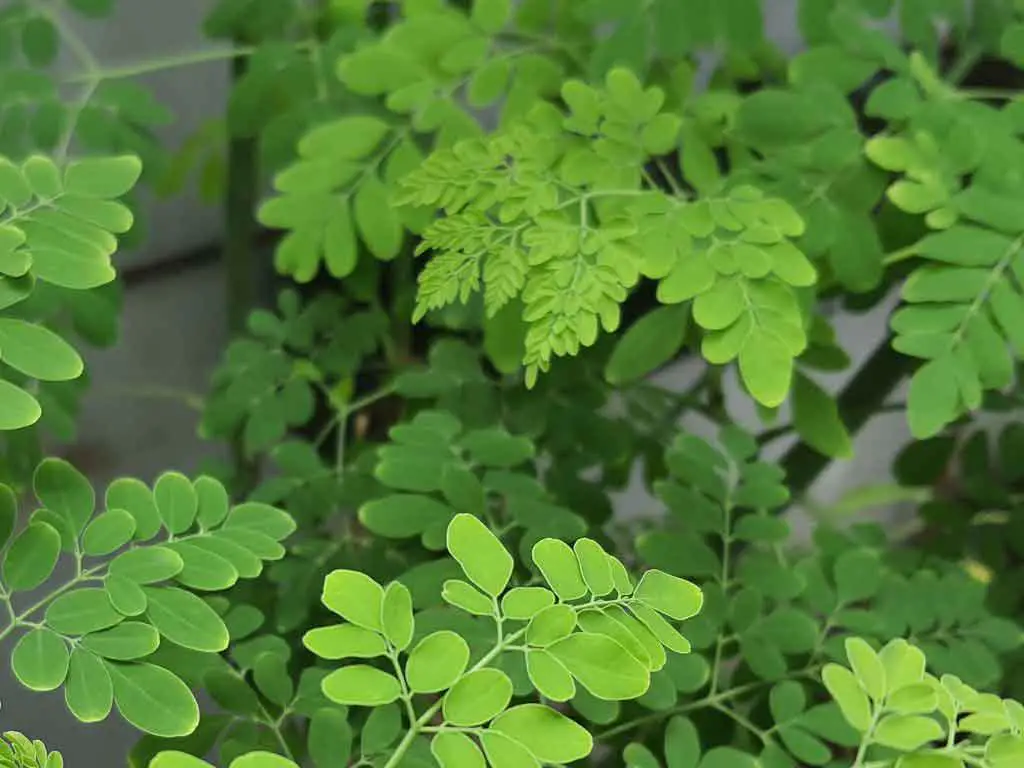
Moringa oleifera, also considered one of the world’s superfoods, is a nutrient-dense plant with hundreds of impressive health benefits. Often referred to as the ‘miracle tree,’ [1] moringa has been used for centuries in traditional medicine to treat various ailments and support our ancestors’ vitality. [2]
A widely-cited academic review has noted that moringa has traditionally been used across cultures for well over 300 different ailments — but this reflects historical and folk use, not clinical proof that moringa treats or cures these conditions. Research to date supports a smaller set of specific benefits, covered below.
Therapeutic Benefits of Moringa
Moringa oleifera is filled with antioxidants [6] and anti-inflammatory [7] agents that can help to protect cells and reduce the risk of chronic diseases. The plant is also a rich source of vitamins, minerals, and amino acids essential for our health. [8]
Furthermore, researchers found this superfood to alleviate physical and chemical irritation-induced immune disorders (i.e., metal intoxication, drug-induced hypersensitivity, additives sensitivity, atopic dermatitis, etc.) in a recent clinical study. [9]
More studies suggest that this protein-packed plant also helps regulate diabetes and exhibited cardioprotective properties. [10] In fact, one study showed that moringa oleifera leaf powder could help lower blood sugar levels and improve insulin sensitivity in people with diabetes. [11]
Moringa contains high levels of fiber, which is essential for a healthy digestive system. This nutrient helps increase regularity, bulk up stools, and reduce the risk of gastrointestinal conditions like constipation, heartburn, and IBS. Moringa also contains potent digestive enzymes that can help break down food and improve nutrient absorption. [12]
What the Research Actually Supports
You’ll find moringa described online as a cure for over 300 diseases. It isn’t. But strip away the hype and there’s a smaller, more interesting story underneath — one backed by real research, including some done right here in the Philippines. Here’s what actually holds up, grouped from strongest evidence to “promising, but let’s not get ahead of ourselves.”
Malunggay and Breastmilk: The One Filipino Moms Already Know
Ask any Filipino mother about malunggay and breastfeeding, and she probably won’t mention a single study. She’ll just tell you it works — her mother told her, she ate it with tinola after giving birth, and her supply came in fine. This is one of those pieces of health folk wisdom that turns out to have real science behind it.
A Philippine hospital ran a proper double-blind trial: mothers of preterm babies got either moringa capsules or a placebo, and by day 4 and 5, the moringa group was expressing noticeably more milk. [13] Another local trial found the same pattern in mothers of full-term babies. [14] When researchers later pooled five of these trials together — 366 mothers in total — the average bump in milk volume by day 7 came out to about 124 mL. [15] A newer 2025 review looking at eight trials found some mothers gaining as much as 400 mL a day, along with higher prolactin levels. [16]
So yes, the folk wisdom checks out reasonably well. Worth being honest about the caveat though: even the researchers behind these studies admit the trials are small and not always tightly controlled, so international breastfeeding guidelines stop short of officially recommending moringa as a fix for low supply. [17] What actually moves the needle most is frequent nursing or pumping — moringa seems to help on top of that, not instead of it.
One safety note that matters: stick to the leaves. Moringa root and bark contain compounds that can affect the uterus and should be avoided, especially during pregnancy. [18] And if you have any clotting disorder, check with your doctor first, since moringa may promote clotting.
Blood Sugar and Antioxidants: A Mixed but Real Picture
Here’s where it gets messier, in a good way — because messy is what honest research usually looks like.
Some trials are encouraging. A 12-week study in prediabetic adults found that 58% of people taking moringa leaf powder saw their HbA1c improve, versus 38% on placebo. [19] A different trial testing a single 20g dose found it blunted the blood sugar spike after a meal — though participants complained the taste made the meal less enjoyable, which, fair. [20] But a separate study in people already diagnosed with type 2 diabetes found no real change in fasting blood sugar or HbA1c after four weeks on moringa. [21] Pool all the available trials together and the honest conclusion is: moringa can modestly soften the after-meal blood sugar spike, but it doesn’t reliably move long-term markers like HbA1c. [22] It’s a supplement, not a substitute for diabetes medication.
The antioxidant story is a little cleaner. A three-month study in postmenopausal women given daily moringa leaf powder found real, measurable increases in the body’s own antioxidant enzymes, plus a drop in a marker linked to cell damage. [23] That’s genuinely one of the better-supported claims on this list — actual biomarkers moving in actual people, not just a petri dish.
And then there’s the part nobody argues with: moringa leaves are just nutritionally dense. Protein, essential amino acids, vitamins A, C, and E, iron, calcium — the nutrition panel alone is impressive. [24] This is probably the real reason moringa has been used for generations to help people recovering from anemia or general undernutrition.
Asthma and Blood Pressure: Small Studies, Real Signal, Not Proof Yet
A small study gave 20 people with mild-to-moderate asthma moringa seed powder for three weeks, and their lung function tests improved — noticeably. [25] The catch: there was no placebo group, so we can’t rule out other explanations. Promising, not proven.
Blood pressure has a similar shape. Forty-one healthy adults ate 120g of cooked moringa leaves and saw a measurable dip in blood pressure afterward, especially those eating a lot of salt. [26] It’s a real, human result — just a small one, and the stronger evidence for this so far is still mostly in animal studies. [27]
The Lab-and-Animal-Only Category (Interesting, But Let’s Be Straight About It)
This next batch gets cited constantly online as settled fact. It isn’t. These are real findings — just not human ones yet.
Heart protection. In rats, moringa extract reduced heart damage after an induced heart attack. [28] A 2025 follow-up found a moringa seed compound lowering heart-stress markers, also in rats. [29] No human cardiac trials exist yet, so treat any “moringa protects your heart” claim as a hypothesis, not a fact.
Joint pain. Rats given moringa extract showed less swelling and pain behavior in an induced arthritis model. [30] Nobody’s tested this in people with actual arthritis.
Gut inflammation. Mouse and rat studies suggest moringa compounds calm inflammation in induced colitis. [31] Zero human trials in ulcerative colitis or IBD so far.
Wound healing. Animal studies — including in diabetic wound models — show moringa extracts speed up healing when applied topically. [32] Again, this hasn’t been tested in people.
Cancer. This is the one that needs the most caution. Lab and animal studies have found moringa compounds triggering cancer cell death across several cancer types, and it’s a genuinely active area of research. [33] But no human clinical trials have confirmed anticancer benefits, and moringa is not, and should never be treated as, a substitute for cancer treatment.
HIV. Two clinical trials in HIV patients already on antiretroviral therapy found that moringa leaf powder improved immune markers like CD4 counts and general nutrition — but didn’t change viral load. [34] Read that correctly: this is nutritional support for people managing HIV, not an antiviral effect.
How You Can Incorporate Moringa into Your Diet
Many health experts and ayurvedic gurus recommend consuming moringa powder or supplements daily. You can find moringa supplements at most health food stores or online.
Additionally, incorporating moringa into your food is very straightforward as manifold cultures already use it as a staple in their diets. Another way to use moringa is by adding the powder to your favorite smoothie or sprinkling it on top of your food.
Although moringa doesn’t have a distinct taste when cooked, it does have a strong aroma. Moringa powder is also very light and can quickly dissolve in liquids.
If you decide to take moringa supplements daily, it’s essential to be mindful of the dosage. Moringa is generally recognized as safe in food amounts. Supplement dosing varies by product and concentration — follow the manufacturer’s label, and speak with a healthcare provider before starting any new supplement, especially if pregnant, breastfeeding, or taking medication (moringa may interact with thyroid and blood sugar medications). Speaking with your physician before starting any supplement regimen is always best.
Despite moringa’s hundreds of benefits, there are a few precautions to consider before consuming you indulge in this superfood. [41-42]
Bottom Line
The breastfeeding connection is the real standout here — well-supported, culturally rooted, and backed by trials done in the Philippines specifically. Blood sugar and antioxidant support come in second, with decent but not airtight evidence. Everything else on this page, from heart protection to cancer, is a “watch this space” — interesting science that simply hasn’t made the jump to human proof yet. Treat moringa as what it is: a genuinely nutrient-dense plant worth having in your diet, not a miracle cure. And if you’re pregnant, breastfeeding, managing diabetes, or on any medication, run it by your doctor first.
References
Moringa and HIV/ART supplementation trials. https://www.ncbi.nlm.nih.gov/pmc/articles/PMC8722362/ and https://pmc.ncbi.nlm.nih.gov/articles/PMC5568305/
Estrella MCP, et al. Effect of a Nutritional Supplement on Prolactin, IGF-1 and Milk Volume Among Mothers of Preterm Infants. Philippine Journal of Pediatrics, 2000. https://www.ncbi.nlm.nih.gov/books/NBK501899/
Espinosa-Kuo C. Efficacy of Malunggay Capsules in Enhancing Milk Volume Among Mothers of Term Infants. The Filipino Family Physician, 2005.
King JS, Raguindin PFN, Dans LF. Moringa oleifera as a Galactagogue: Systematic Review and Meta-Analysis. Philippine Journal of Pediatrics, 2013. https://pubmed.ncbi.nlm.nih.gov/24892837/
Ammar et al. Moringa oleifera Supplementation as a Natural Galactagogue: A Systematic Review, 2025. https://www.ncbi.nlm.nih.gov/pmc/articles/PMC12294722/
Academy of Breastfeeding Medicine Clinical Protocol #9: Use of Galactogogues. https://pubmed.ncbi.nlm.nih.gov/29902083/
NCBI LactMed — Moringa. https://www.ncbi.nlm.nih.gov/books/NBK501899/
Prediabetes RCT, moringa leaf powder and HbA1c. https://www.ncbi.nlm.nih.gov/pmc/articles/PMC8746299/
Type 2 diabetes RCT, moringa leaf capsules. https://www.ncbi.nlm.nih.gov/pmc/articles/PMC5727834/
Leone A, et al. Nutrients, 2018. https://www.ncbi.nlm.nih.gov/pmc/articles/PMC6213450/
Meta-analysis of 9 RCTs, cardiometabolic outcomes. https://www.ncbi.nlm.nih.gov/pmc/articles/PMC12655524/
Kushwaha S, Chawla P, Kochhar A. Effect of Drumstick Leaves Powder on Antioxidant Status. J Food Sci Technol, 2014.
Moringa nutritional composition review. https://www.ncbi.nlm.nih.gov/pmc/articles/PMC11479159/
Agrawal B, Mehta A. Antiasthmatic Activity of Moringa oleifera. https://www.ncbi.nlm.nih.gov/pmc/articles/PMC3023118/
Chan Sun M, et al. Moringa oleifera Leaves Lower Postprandial Blood Pressure. J Am Coll Nutr, 2020. https://pubmed.ncbi.nlm.nih.gov/31063434/
Moringa and Blood Pressure review, 2025. https://www.ncbi.nlm.nih.gov/pmc/articles/PMC11990149/
Nandave M, et al. Cardioprotective Effect of Moringa oleifera in Rats. J Med Food, 2009.
Moringa seed compound, cardiac stress markers in rats, 2025. https://www.ncbi.nlm.nih.gov/pmc/articles/PMC12418292/
Mahdi HJ, et al. Anti-arthritic Activity of Moringa oleifera. https://pubmed.ncbi.nlm.nih.gov/29629295/
Moringa colitis animal studies. https://www.ncbi.nlm.nih.gov/pmc/articles/PMC9686441/
Moringa wound healing scoping review. https://www.ncbi.nlm.nih.gov/pmc/articles/PMC9457785/
Moringa anticancer lab/animal research review, 2024.
https://www.medicalnewstoday.com/articles/319916
https://www.ncbi.nlm.nih.gov/pmc/articles/PMC5958191/
https://www.sciencedirect.com/science/article/pii/S2213453016300362
https://www.ncbi.nlm.nih.gov/pmc/articles/PMC5568305/
https://www.sciencedirect.com/science/article/pii/B9780128092866000108
https://www.ncbi.nlm.nih.gov/pmc/articles/PMC5745501/
https://www.ajol.info/index.php/ajb/article/view/96497
https://www.ncbi.nlm.nih.gov/pmc/articles/PMC7773658/
https://pubmed.ncbi.nlm.nih.gov/28397639/
https://core.ac.uk/download/pdf/82415642.pdf