
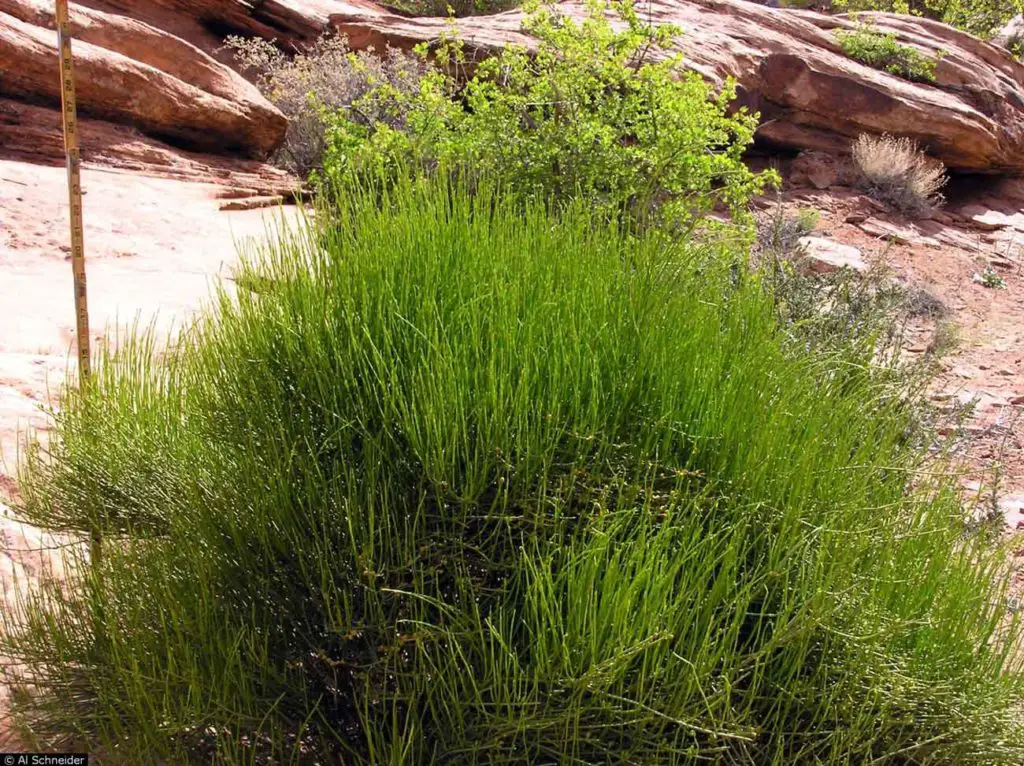
Mormon tea is a caffeine-free herbal beverage brewed from the stems of Ephedra nevadensis, a leafless desert shrub native to the American Southwest and northern Mexico. If you’ve spent any time around herbal supplements, you’ve probably also heard warnings about “ephedra” being risky or even banned — and that mix-up is honestly the most important thing to untangle before we get into anything else. Mormon tea and the ephedra that got pulled from weight-loss supplements are related, but they’re not the same plant, and they don’t behave the same way in your body.
Quick Summary
Mormon tea is a traditional Southwestern desert beverage made from Ephedra nevadensis, historically used by Indigenous groups and later by Mormon settlers as a caffeine-free stimulant and folk remedy. Unlike its cousin Ephedra sinica (ma huang), lab testing has repeatedly confirmed that Mormon tea contains no ephedrine — the alkaloid responsible for ephedra’s cardiovascular risks and its FDA restriction. Most of its traditional uses, including for colds and as a mild diuretic, are backed by tradition and limited lab work rather than human clinical trials, so it’s best approached as a mild, occasional beverage rather than a treatment for anything serious. It’s generally well tolerated for healthy adults in moderate amounts, though the tannin content is worth being mindful of if you drink it daily for years on end.
What is Mormon Tea?
Mormon tea is made by steeping the fresh or dried stems of Ephedra nevadensis in hot water. The plant itself is a low, leafless shrub — its green, jointed stems do the photosynthesizing that leaves would normally handle, which gives it a distinctive, almost skeletal look. It produces small cone-like flowers and dark brown seeds, and it’s built to survive on very little water, which is why it thrives across the desert basins of Nevada, California, Arizona, and northern Mexico.
In Mexico it’s known as popotillo. Among English speakers it’s picked up a whole list of nicknames over the years — Brigham Tea, Cowboy Tea, Squaw Tea, Canyon Tea, Teamster’s Tea — but “Mormon tea” stuck because members of The Church of Jesus Christ of Latter-day Saints, who avoid caffeine, adopted it early on as a hot drink they could actually have. Brigham Young, an early leader of the church, is where the “Brigham Tea” name comes from.
First-time drinkers are usually caught off guard by the taste. It’s bitter and a little astringent, thanks to the tannins, resins, and volatile oils in the stems — most regular drinkers say it grows on you, and a spoonful of honey or sugar goes a long way if it doesn’t.
Mormon Tea Benefits and Uses
Caffeine-Free Stimulant
Mormon tea has zero caffeine, but plenty of people who drink it describe a mild energizing effect — anecdotally anywhere from barely noticeable to fairly strong, depending on who you ask. For a long time there was genuine confusion about what was causing that effect, since ephedra species in general are known stimulant plants. That confusion is largely settled now: lab analyses of Ephedra nevadensis have repeatedly found it free of ephedrine, the alkaloid found in Ephedra sinica (ma huang) that’s responsible for that plant’s stimulant punch and its cardiovascular risks.[1] Whatever mild lift Mormon tea provides seems to come from a different, much gentler set of compounds — which is a big part of why it built a reputation as the go-to hot drink for people avoiding coffee and tea for religious or health reasons.
May Support Mild Diuretic Activity
One of Mormon tea’s oldest folk uses is as a kidney “flush” or general diuretic. Lab testing on both the traditional tea and alcohol-based extracts of the plant found it does increase urine output, though notably less aggressively than harsher diuretics — and interestingly, the plain water-based tea outperformed the alcohol extract.[2] There isn’t clinical research confirming any broader benefit to kidney health from regular use, just this basic diuretic effect, so it’s fair to call this a traditional use with some laboratory support rather than a proven kidney remedy.
Traditional Remedy for Colds and Congestion
Mormon tea has long been used as a folk remedy for colds and stuffy sinuses, and the reasoning tracks: the tannins in the plant have an astringent, drying effect that could plausibly reduce mucus production. That said, there’s no clinical trial evidence confirming it actually clears up a cold faster — health databases that review herbal evidence consistently note there’s no good scientific data behind this specific use.[3] Worth trying as a warm, soothing drink when you’re stuffed up; if you want options with more research behind them, our roundup of the best antiviral herbs is a better place to start.
Historical Folk Remedy for Sexually Transmitted Infections
This is one of the more surprising chapters in Mormon tea’s history. Long before antibiotics existed, it had a real reputation as a treatment for syphilis and gonorrhea — the Zuni people used infusions of the plant this way, and the practice carried into 19th-century California and Nevada, where it reportedly became a staple in brothels.[4] Penicillin made all of that obsolete for good reason: there’s no clinical evidence Mormon tea treats these infections, and delaying real treatment for a bacterial STI can lead to serious complications. This one’s genuinely interesting folklore, not medical advice — if you suspect you have an STI, see a physician.
Traditional (Unproven) Weight Loss Aid
Weight loss is probably the single most-searched reason people look up Mormon tea, and it’s almost certainly because of the ephedra name mix-up — ephedrine-containing ephedra was a popular weight-loss stimulant before the FDA restricted it in 2004 over cardiovascular safety concerns. Mormon tea itself has no clinical research behind it for weight loss specifically. Any effect people report is anecdotal, and if it’s real at all, it more plausibly comes from its mild stimulant properties than anything targeted at fat loss. Worth knowing about, not worth relying on.
Mormon Tea Side Effects, Toxicity, Interactions and Safety
Mormon tea is generally considered mild and well tolerated in typical “food amount” servings, including for pregnant or breastfeeding women, but a few things are worth knowing:
- Dehydration risk. As a diuretic, it increases urination, so make sure you’re drinking enough water alongside it.
- Digestive effects. A lab study noted potential constipation with concentrated extract use, and physicians have flagged possible liver, kidney, and stomach irritation with heavy use.[2]
- Cancer risk from chronic heavy use. Older epidemiological research on tannin-rich desert “bush teas” — including a close Ephedra relative historically sold as “squaw tea” — found a correlation between years of heavy consumption and esophageal cancer risk.[5] This hasn’t been studied specifically in Ephedra nevadensis, but it’s a reasonable argument for treating this as an occasional beverage rather than a daily habit over the long term.
- Medication interactions. Mormon tea may bind to and reduce the absorption of other substances in the digestive tract. If you’re taking medication, it’s generally recommended to space your dose at least an hour apart from drinking the tea.
- Don’t confuse it with ephedrine-containing ephedra. If you have a cardiovascular condition or are sensitive to stimulants, make sure any product you buy is specifically Ephedra nevadensis and not Ephedra sinica (ma huang), which does contain ephedrine and carries real cardiovascular risk.
As always, if you’re pregnant, breastfeeding, managing a health condition, or taking medication, check with your doctor before adding Mormon tea to your routine.
Mormon Tea Recommended Dosage
The traditional serving is about one cup (250 mL) of tea, made by steeping one teaspoon of dried Ephedra nevadensis stems in hot water for around 20 minutes, then straining. Most sources recommend capping daily intake at two cups (500 mL). If you’re using powdered stems instead of whole ones, use less than you think you need — the powder is more easily absorbed and dissolved, so it’s easy to overdo it.
Buying Mormon Tea
What to look for?
When shopping for Mormon tea, it is important that the sole ingredient is Ephedra nevadensis. Consumers are advised to take care not to confuse it with other members of the ephedra genus as they are likely to contain components that could produce a negative reaction. It is best that interested consumers look into the background of the supplier from which they are purchasing to ensure that they have a positive reputation as a business. Consumers with cardiovascular or problems with circulation are advised to avoid products that contain ephedrine, most notably a popular counterpart known as Ephedra sinica (see below).
Mormon Tea Powder or “Leaves”?
Mormon tea actually has stems and not leaves and traditionally the stems are used to create the tea. However; powdered versions of Mormon tea have become increasingly popular and many customers that use the powder claim that the it has a smoother taste. They also prefer the powder, as it entails easier clean-up. However, one must be careful when utilizing the powder, not to use too much, as it is more easily absorbed and dissolved.
How to make Mormon Tea?
- Bring filtered water to a boil, then remove it from heat.
- Steep one teaspoon of dried (or fresh) Ephedra nevadensis stems per cup of water for about 20 minutes.
- Strain well.
- Let it cool to a comfortable drinking temperature — a spoonful of honey, sugar, or jam helps balance the bitterness if you’re not used to it yet.
How Much Ephedrine is in Mormon Tea?
The exact amount of ephedrine in Mormon Tea is zero. Ephedrine and Ephedra are different and should not be confused with each other. There are many species of the Ephedra plant, the ones that are illegal in many parts of the world contain the dangerous stimulant ephedrine.
Mormon Tea vs. Ma Huang (Ephedra Sinica)
It’s worth repeating this clearly, because the confusion between these two plants is where most of the safety concerns around “ephedra” actually come from. Ma Huang (Ephedra sinica) is a related but distinct species, native to China, that does contain ephedrine — the compound responsible for both its stimulant effects and the heart attack and stroke risk that led the FDA to restrict ephedra-containing supplements in 2004.[6] Mormon tea does not contain ephedrine. If you’re browsing herbs to lower blood pressure or manage a cardiovascular condition, that distinction matters — and it’s exactly the kind of label detail worth double-checking before you buy any ephedra product.
Conclusion
Mormon tea has a genuinely rich history — from Indigenous desert communities to Mormon settlers to 19th-century brothels — and it’s earned its place as a caffeine-free stimulant beverage with a few modest, mostly traditional health uses. What it isn’t is a treatment for serious conditions, a proven weight-loss aid, or the same thing as the ephedrine-containing ephedra that got pulled from supplement shelves. Approached as an occasional, mild herbal beverage rather than a medicine cabinet staple, it’s a genuinely interesting piece of American herbal history worth trying.
FAQs
No. Mormon tea (Ephedra nevadensis) is naturally caffeine-free, which is part of why it became popular among people avoiding caffeine for religious reasons.[1]
Not exactly. “Ephedra” usually refers to Ephedra sinica (ma huang), which contains ephedrine and carries real cardiovascular risks. Mormon tea comes from Ephedra nevadensis, which lab testing has confirmed does not contain ephedrine.[1][6]
There’s no clinical evidence for this. Any reports of weight loss are anecdotal, and the association likely comes from confusion with ephedrine-containing ephedra, which was studied (and later restricted) for weight loss.
In moderate amounts (up to about two cups daily) it’s generally considered mild and well tolerated. However, older research links heavy, long-term consumption of tannin-rich desert teas to increased esophageal cancer risk, so it’s worth treating as an occasional drink rather than a daily habit over years.[5]
It’s a long-standing folk remedy for congestion, and its astringent tannins plausibly reduce mucus, but there’s no clinical trial evidence confirming it shortens or clears a cold.[3]
It’s generally regarded as safe in typical food amounts, but you should check with your doctor before using it regularly during pregnancy or breastfeeding.
References
- Determination of Ephedra Alkaloids in Urine and Plasma by HPLC-UV: Collaborative Study. J AOAC Int. PMC: https://pmc.ncbi.nlm.nih.gov/articles/PMC2584345/
- Mormon Tea — Overview and diuretic/side effect data. NCBI/PubMed: https://www.ncbi.nlm.nih.gov/pubmed/28308989
- Mormon Tea evidence review. Natural Medicines Database summary via WebMD: https://www.webmd.com/vitamins/ai/ingredientmono-569/mormon-tea
- Ephedra nevadensis traditional use among the Zuni people. Wikipedia (citing ethnobotanical sources): https://en.wikipedia.org/wiki/Ephedra_nevadensis
- Kapadia GJ, Rao GS, Morton JF. Herbal Tea Consumption and Esophageal Cancer. (Tannin-rich desert tea/esophageal cancer correlation research.)
- Ephedra — FDA restriction and ephedrine-related cardiovascular risk. Memorial Sloan Kettering Cancer Center: https://www.mskcc.org/cancer-care/integrative-medicine/herbs/ephedra
Your dosing and preparation instructions could use some clarification. Is it 1 tsp of fresh or dried herb to 1 cup water? You mention I tsp “tea” in water but tea is usually an herbal preparationnin water so it makes no sense. Also usually the fresh herb content differs from the dried herb so that could use clarifying. Otherwise it’s a very informative article!
I can see how it’s a bit confusing. It’s 1 tsp of dried herb.
I used to drink this as a kid. It’s pretty good. By the way, the correct name of the “Mormon” church is “The Church of Jesus Christ of Latter-day Saints” rather than “The Church of the Latter-day Saints”.
Good to know, thanks Rob!
Thanks, this is a nice article to reference. I had bought some a couple of years ago and then didn’t use it. I was looking up the information to see why, and I now remember!! Help for allergies and weight. 😜
Just curious, it’s been a year since the above comment about the name of the church. Any chance you are willing to update three article to use the correct name of the church in your article?
Thanks, Paige
Hi Paige! It’s been updated. Thank you
Is it called The Church of Jesus Christ of Latter-day Saints tea?